Politics and Eating Disorders: Coping with Stress in Uncertain Times
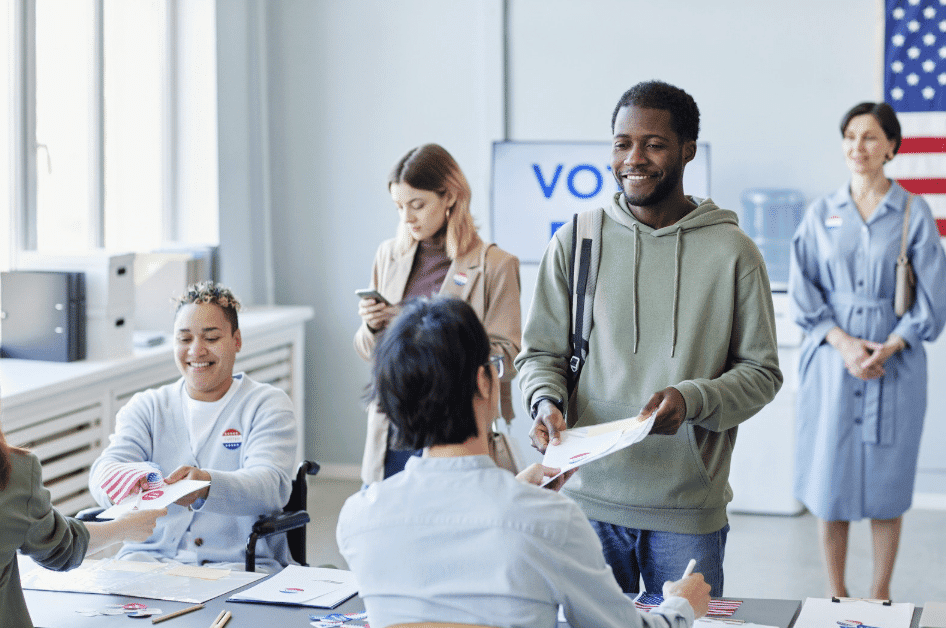
The news cycle never stops. Political tensions rise and fall like waves, leaving many of us feeling swept away by forces far beyond our control. With Election Day quickly approaching, these emotions can feel even more heightened, adding another layer of uncertainty and stress. In times of national change, whether elections, policy shifts, or social upheaval, it’s natural to seek stability wherever we can find it. For many people, that longing for stability often turns inward, toward food, body image, and eating behaviors, which is where the connection between politics and eating disorders can emerge.
Politics and Eating Disorders: The Hidden Connection
When the world feels chaotic, our bodies respond with stress mechanisms designed for immediate physical threats. But modern stressors like political uncertainty may trigger these same fight-or-flight responses, flooding our systems with cortisol and adrenaline day after day. This chronic stress doesn’t just affect our mood–it fundamentally alters our relationship with food and our bodies.
Some people respond by restricting food intake, finding a sense of control through limitation when everything else feels unpredictable. Others turn to food for comfort, seeking temporary relief from overwhelming emotions. Still others find themselves caught in cycles of binge eating followed by shame and restriction. These responses are especially common when looking at the link between politics and eating disorders, as external stress can intensify existing internal struggles with food and body image. None of these responses are character flaws – they’re natural human attempts to cope with an environment that feels threatening and unstable.
Political stress also amplifies existing vulnerabilities around body image and self-worth. Social media feeds become battlegrounds of opposing viewpoints, while simultaneously bombarding us with idealized imagery and comparison triggers. When we feel powerless to influence larger events, criticizing our appearance can become an attempt to regain some sense of agency.
The Perfectionism Trap of Politics and Eating Disorders
Political uncertainty often intensifies perfectionist tendencies. If we can’t control national outcomes or policy decisions, perhaps we can control our eating, our exercise habits, our appearance. This all-or-nothing thinking – which is so prevalent in political discourse – may transfer to our relationship with food and body image. In fact, politics and eating disorders often intersect here, as meals become “good” or “bad,” bodies become “acceptable” or “shameful,” and self-worth becomes tied to rigid rules and impossible standards.
The irony is that this pursuit of control through restriction or compulsive behaviors actually increases our sense of chaos and instability. When we’re undernourished or caught in disordered eating patterns, our ability to cope with stress, political or otherwise, becomes severely compromised.
Finding Your Center When Everything Feels Off-Balance
This is where balance becomes not just helpful, but essential. True balance isn’t about perfect moderation in all things. It’s about developing a flexible, responsive relationship with food and your body that can weather external storms. When it comes to politics and eating disorders, finding this balance is especially important, as external stressors can easily intensify the pull toward rigid or harmful coping strategies.
With these thoughts in mind, here are tips to help you find balance:
Grounding In the Present Moment
When political anxiety spirals into future catastrophizing, grounding techniques can bring you back to what’s actually happening right now. Remember: Your body needs nourishment today, regardless of tomorrow’s headlines.
Honoring Your Needs Without Judgment
Political stress is real stress, and stressed bodies have different needs. Sometimes, that means eating more comfort foods; other times, it means prioritizing regular meals when anxiety suppresses appetite. Balance means responding to what you actually need rather than what you think you “should” do.
Building Resilience Through Self-Compassion
The harsh inner critic that might judge your political views, your appearance, or your eating choices weakens your overall resilience. Self-compassion, or treating yourself with the same kindness you’d offer a good friend, builds the emotional strength needed to navigate uncertain times.

Creating Pockets of Stability
While you can’t control political outcomes, you can create reliable rhythms in your daily life. Regular meals, adequate sleep, and movement that feels good become anchors in turbulent times.
Moving Forward with Intention
Political engagement and advocacy can be meaningful ways to channel stress into action, but they work best when built on a foundation of self-care rather than self-neglect. A well-nourished, emotionally regulated person is far more capable of sustained involvement in causes they care about than someone running on anxiety and restriction. This is especially true when considering the connection between politics and eating disorders, where stress can easily disrupt recovery if self-care is overlooked.
Remember that taking care of your relationship with food and your body isn’t selfish or superficial. It’s a radical act of resistance against a culture that profits from your self-doubt and distraction. For those navigating politics and eating disorders, grounding in your own worth and needs is key. After all, when you’re supported and nourished, you’re better equipped to engage with the world from a place of strength rather than depletion.
The political landscape will continue to shift and change, often in ways we cannot predict or control. But the relationship you have with food, with your body and with your inherent worth remains yours to nurture and protect. In uncertain times, that balance becomes not just personal healing, but a foundation for meaningful participation in the world around you.
Get Eating Disorder Recovery Support
BALANCE eating disorder treatment center™, located in New York City, offers free consultation calls to help you explore next steps. We provide in-person programming seven days a week and are in-network with UnitedHealthcare (UHC), Cigna, Emblem, and Oscar, with Aetna coverage coming soon. Support is available, and recovery is possible. Schedule a free consultation call with our admissions team here and stay connected with BALANCE on Instagram here.
This post was written by BALANCE Outreach Specialist and Lead Marketing Coordinator, Alina Shaikh (she/her).
Alina Shaikh joined BALANCE eating disorder treatment center™ as the Marketing Coordinator in 2022. Having received her BA in Advertising Psychology and English Literature from the University of Toronto, she’s been directing campaigns for over seven years throughout her collegiate and post-grad career. With intensive coursework at the University of Oxford and the London School of Economics, she incorporates data-driven tools from her UI/UX background to help shape the way we see behavioral patterns and habits. Her drive is propelled by subverting the traditional landscape of marketing temperaments towards a more sustainable future.